Shockoe Institute Presents: An Evening at the ICA
“The three most important words you need to remember when you think about us as an organization are: learn, reflect, and act. That is what we are here to do this evening.”
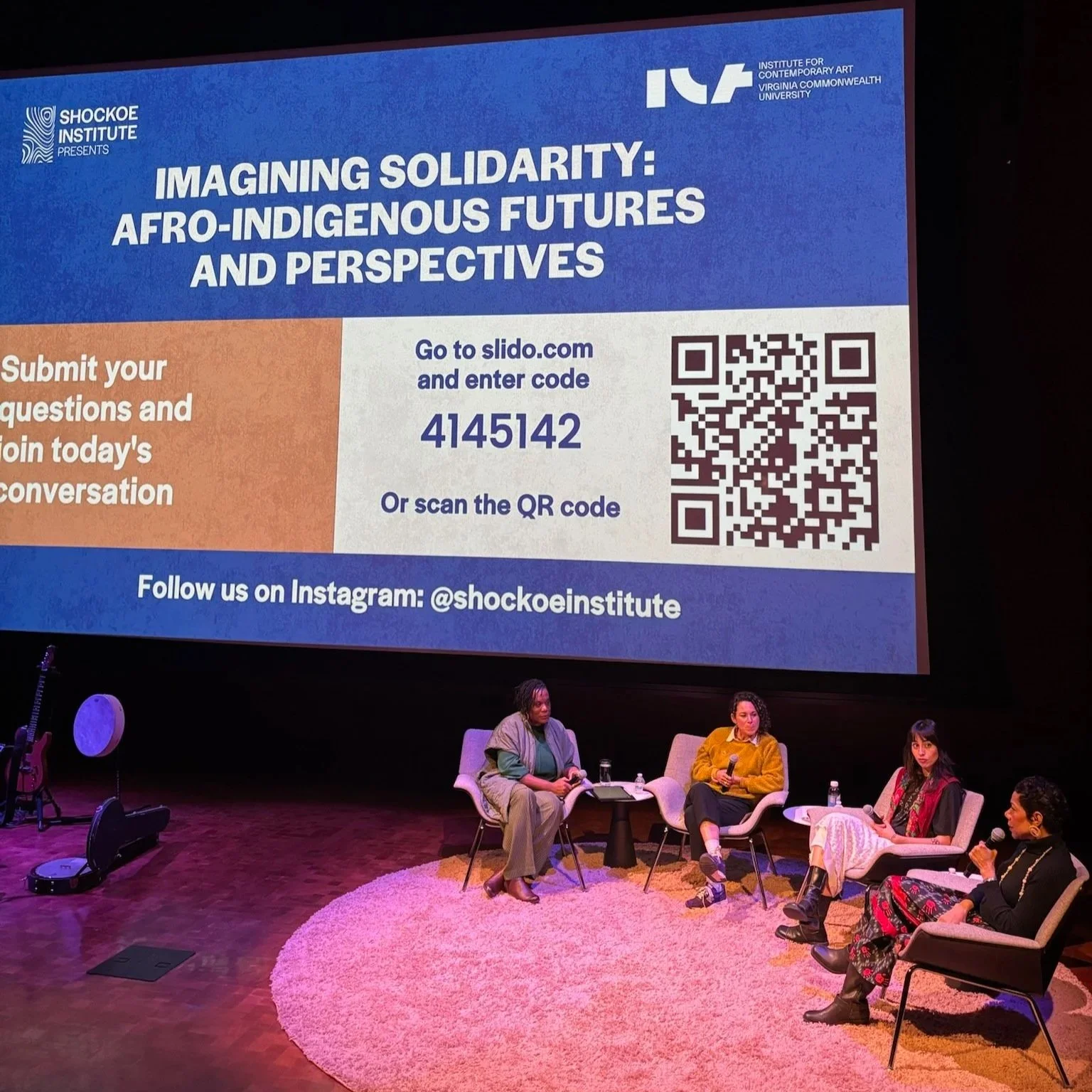
With those words, Shockoe Institute President & CEO Marland Buckner introduced our event Imagining Solidarity: Afro-Indigenous Futures and Perspectives, in partnership with the Institute for Contemporary Art (ICA) at VCU. This special program was curated and hosted by the Shockoe Institute’s Founding Artistic Director Leyla McCalla as part of the Shockoe Institute Presents series.
This evening of artistic expression, creative exploration, and powerful discussion included live performances by three awe-inspiring musicians: Black, Chickamauga and Choctaw singer-songwriter Martha Redbone, cross-genre First Nation Odanak musician Mali Obomsawin, and Lumbee/Tuscarora singer-songwriter Charly Lowry.
Before the musical performances, McCalla spoke about how artistic expression helps bring the Shockoe Institute’s future-looking mission to life.
“Our mission to explore the enduring impact of racial slavery in the United States is not just an intellectual exercise,” she said. “It's a spiritual calling, and it's deeply needed. This work allows me the opportunity to continue imagining a world where we don't shy away from our history but use it help us better understand where we need to go.”
Together, Redbone, Obomsawin, and Lowry performed a selection of meaningful songs, representing unique blends of musical styles and cultures. They also shared the meaning behind each song they played, their own backgrounds, stories, and experiences, and the way those inspired their musical choices.
Before she began her performance, Redbone commented on her background and evoked the importance of memory and legacy.
“I am Black, Chickamauga and Choctaw,” she said. “It is very important in this time that we are living in, in a time of erasure, to remember who we are and to honor all that we are... and where we come from.”
While introducing a song during her set, Lowry emphasized the courage of those who sought to expand freedom in the past as inspiration for demonstrating that same courage in our present.
“I come from a people who have a lot of backbone, and a lot of resiliency,” she said. “This pertains to just all of us living during this time, right now, these current times. We the people have to remember that we have backbone, okay?”
Near the end of her set, Obomsawin spoke about how these enduring legacies that inform the indigenous experience continue to impact people today.
“There's a lot of different ways that we are separated from each other,” she said. “As Native people, but also as poor people...And there are so many ways that we separate from ourselves in order to deal with it.”
Following the performances, they engaged in a timely conversation about Afro-Indigenous culture, moderated by Dr. Tiffany Lethabo King. The conversation previewed many of the themes explored in the first section of our Expanding Freedom exhibit, entitled Clash of Cultures, which explores the profound effects European colonization has on the indigenous cultures of the Americas and Tsenacomoco – the native lands of Eastern Virginia. Visitors to this section of Expanding Freedom will learn how the Powhatan people flourished and how the colonists’ ingrained notions of superiority led to conflict, repression, and enslavement, setting the stage for later forms of racial control.
This exhibit is scheduled to open in April 2026 in Richmond's Main Street Station.
As the event drew to a close, Obomsawin commented on the expectations many audiences had in the past about indigenous performers, how those expectations endure, and how she and the other performers on the stage that night are helping to upend those historic assumptions.
“How about we don't give people what they expect or want from a Native performance?” She asked the audience. “How about we just get to be ourselves and do what we like? We should do it all, and we should be no less native performers for it.”