
Past to Present: Teaching Vinegar Hill Today
How a Collaborative Design Lab Transformed Student Learning
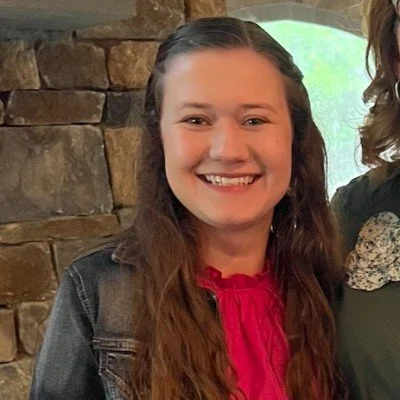
By Rachel Morrison, a U.S. History and dual enrollment teacher at Goochland High School in Goochland County, Virginia. Ms. Morrison was named the 2026 Virginia Regional Teacher of the Year for Superintendent’s Region 1.
Last November, I had the opportunity to participate in a Design Lab experience hosted by the Shockoe Institute and the Jefferson School African American Heritage Center centered on the history of Charlottesville’s Vinegar Hill neighborhood. Vinegar Hill, previously a black neighborhood, was razed in the late 1960s as part of the national Urban Renewal effort that destroyed minority communities in cities across the country. Many residents were permanently displaced and the area looks completely different to this day. If you'd like to learn more about the history of Vinegar Hill, please explore this story map by Adam Stievater.
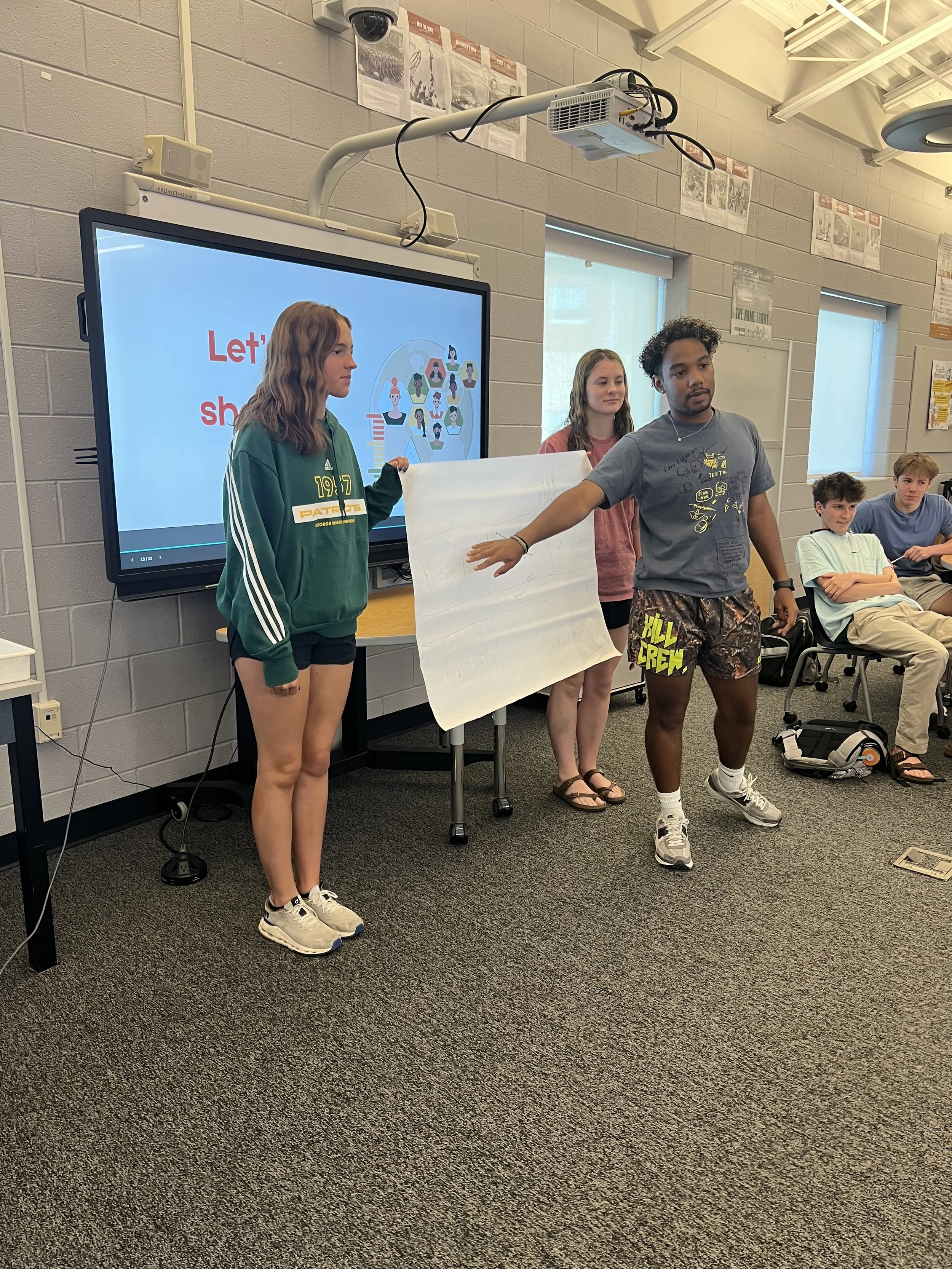
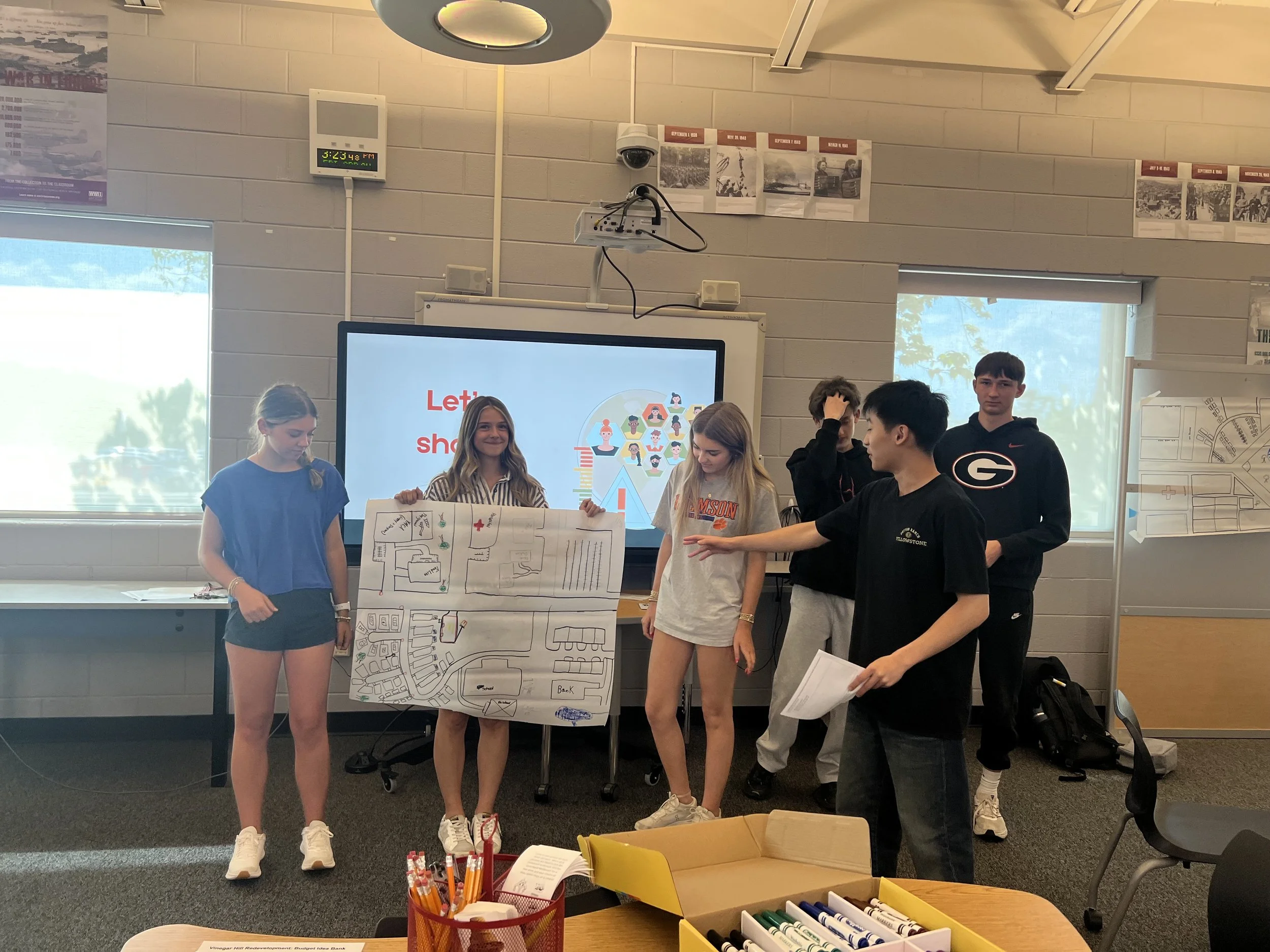
11th grade U.S. History students presenting their proposals for the Vinegar Hill neighborhood
The one-day Design Lab, led by the Shockoe Institute, charged students and teachers to work together to create community development proposals for Vinegar Hill. I left the workshop inspired not only by the history itself, but by the way the experience challenged both students and educators to connect difficult history to our modern lives and communities. Immediately, I could adapt that experience into a meaningful lesson for my own 11th grade U.S. History students.
What resonated with me was the Shockoe Institute’s mission to explore the enduring impact of history while encouraging reflection and civic understanding. This closely mirrors my teaching philosophy. I want students to see history not as static names and dates to memorize, but as real human experiences that continue to shape the world around us. Through living history conversations with veterans, simulations, case studies, and public history analysis, my students engage in historical inquiry rather than passively observe.
Inspired by the Shockoe Institute's Design Lab event in November 2025, I modified the simulation where students examined Vinegar Hill’s growth as a thriving Black neighborhood and its destruction during Urban Renewal. One adaptation I made was assigning every student an individual stakeholder role, including descendants, developers, preservationists, housing advocates, and city planners. Giving students ownership of a perspective ensured full participation while helping them better understand the competing priorities that exist within communities.
Students worked collaboratively to create a modern redevelopment proposal and budget, balancing present-day needs with historical preservation. Students connected urban renewal to modern conversations about gentrification and began questioning whose stories are preserved, whose are erased, and what role citizens should play in protecting community history. Students recognized how little they previously knew about Vinegar Hill despite its importance in Virginia history and the fact that most of them had even been through the neighborhood before. That local connection transforms urban renewal, displacement, and public memory from abstract historical concepts into something students see in their communities. Working with the Shockoe Institute has given me another way to show students the power local history plays in connecting the past to the present.
Thanks so much,
Rachel Morrison
Story Map credit: Adam Stievater, Urban Renewal in Vinegar Hill: An Asphalt Scar in Charlottesville's Urban Fabric, December 10, 2023. Arcgis Urban Renewal in Vinegar Hill
The views and opinions expressed in this post are those of the guest author and do not necessarily reflect the official positions or perspectives of the Shockoe Institute.
