
America's Paper Trail of Belonging
What do colonial-era tribal badges, freedom papers, and a Real ID have in common?

By Leighton Sloane Christian Student - Barnard College of Columbia University Mellon Mays Undergraduate Fellow, and Guest Blogger
Throughout American history, pieces of paper, badges, and government-issued identification have dictated far more than physical mobility. They have shaped recognition, protection, legal rights, and even how fully individuals were considered human.
Although these documents have changed over centuries, the question underlying them has remained remarkably consistent:
Who gets recognized as belonging?
This deceptively simple question framed the Shockoe Institute's discussion, Born in the USA, But Do You Belong? Rather than treating citizenship as a fixed legal category, the conversation invited audiences to consider how belonging has been continually negotiated throughout United States history.
The discussion took place less than a month after the Supreme Court's decision in Trump v. Barbara, which left intact the constitutional guarantee of birthright citizenship and struck down Executive Order 14160. Against that contemporary backdrop, and as part of the Unfinished Business series, the conversation explored questions that long predate the present moment. Inspired by Dr. Samantha Seeley's book Race, Removal, and the Right to Remain: Migration and the Making of the United States, the panel brought together Dr. Seeley, Chief Anne Richardson of the Rappahannock Tribe, and the Honorable Roger L. Gregory, former Chief Judge of the United States Court of Appeals for the Fourth Circuit.
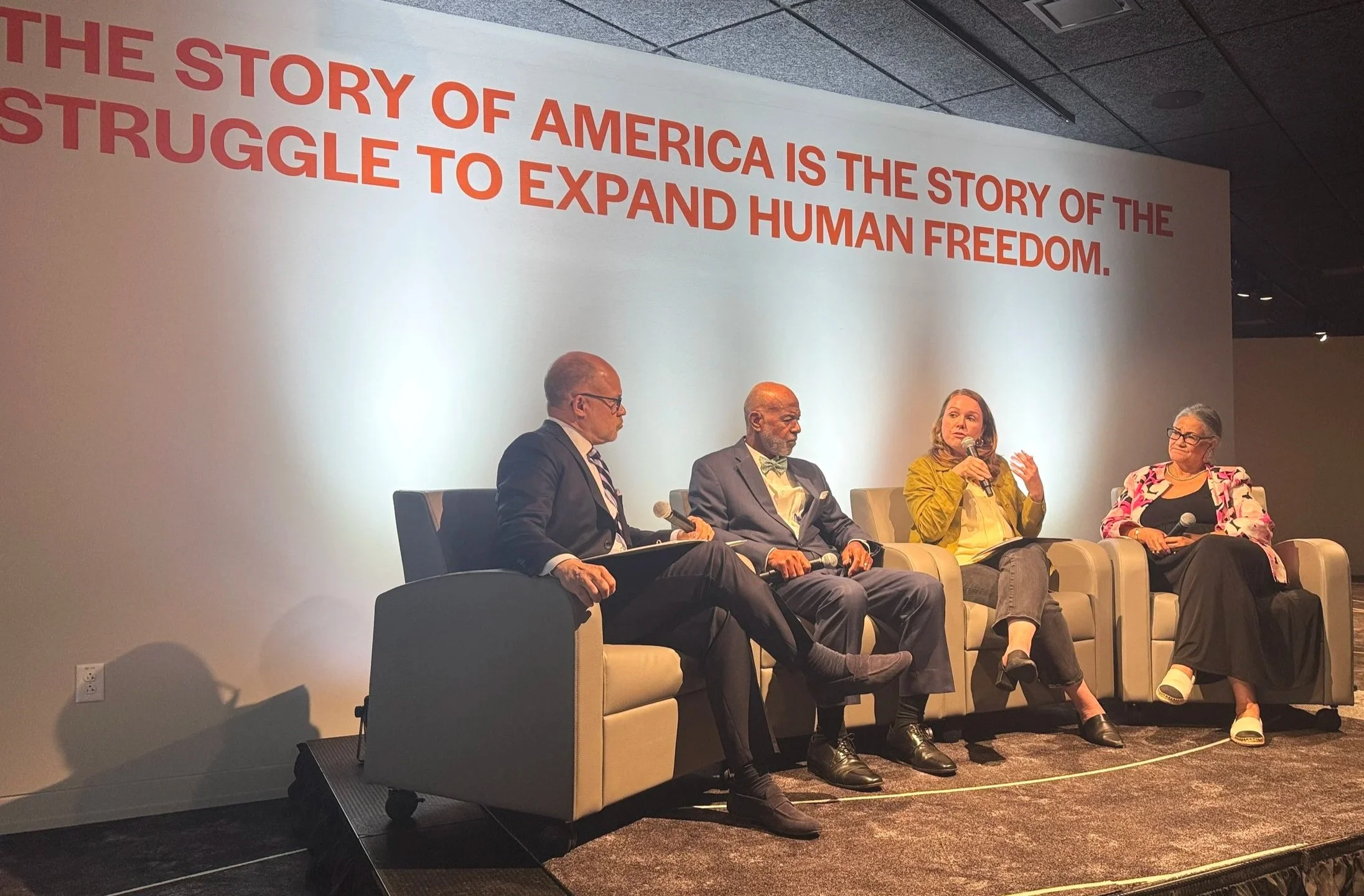
Moderated by Shockoe Institute President and CEO Marland Buckner, the evening centered on what he described as “the question of not just citizenship, but belonging.”
Dr. Seeley grounded the discussion, reminding the audience that debates over belonging are as old as the nation itself. In fact, one of the earliest controversies in the United States, she explained, was quite a similar ‘simple’ question:
Who is the “we” in “We the People”?
While the Constitution established the nation's framework, it did not initially define its scope of inclusion. From the nation's inception, Americans have continuously contested the boundaries of that collective “we.” Consequently, citizenship, rights, and belonging have remained inextricably linked to these ongoing debates.
As the conversation unfolded, I found myself thinking back to one of the objects visitors encounter in the Shockoe Institute's Expanding Freedom exhibition: colonial-era tribal badges.
Issued by early colonial governments, these metal badges identified certain Indigenous communities as “friendly.” On the surface, they functioned as passes meant to distinguish allies from enemies. But beneath that organizational purpose lay something much more complex. The badges made belonging conditional. They transformed identity, humanity, and belonging into something that required official recognition. They reveal a persistent truth: identity and humanity have long been intertwined, and the authority to issue a document has often carried with it the authority to define not only who belongs, but also by what criteria.
Her observation underscored how these negotiations occur throughout our nation's history, through documentation— not simply documents as necessities of mobility and identification, but documents as instruments through which our government defines identity itself.
Buckner addressed these legal categories head-on, naming the “hierarchy of human value” underpinning these negotiations. Throughout American history, documents have not merely recorded belonging. They have participated in producing it, and the colonial badges are only one example.
For many formerly enslaved African Americans, freedom itself became something that required documentation. Freedom papers: carefully folded pieces of parchment carried on one’s person, served as tangible proof that someone who could otherwise be presumed enslaved was legally free. Without them, freedom itself could become precarious. Their existence reveals a profound irony: liberty, supposedly inalienable, had to be continually demonstrated. The burden of proof rested not upon those questioning another person's freedom, but upon the individual forced to carry evidence of it. That burden echoes across American legal history.
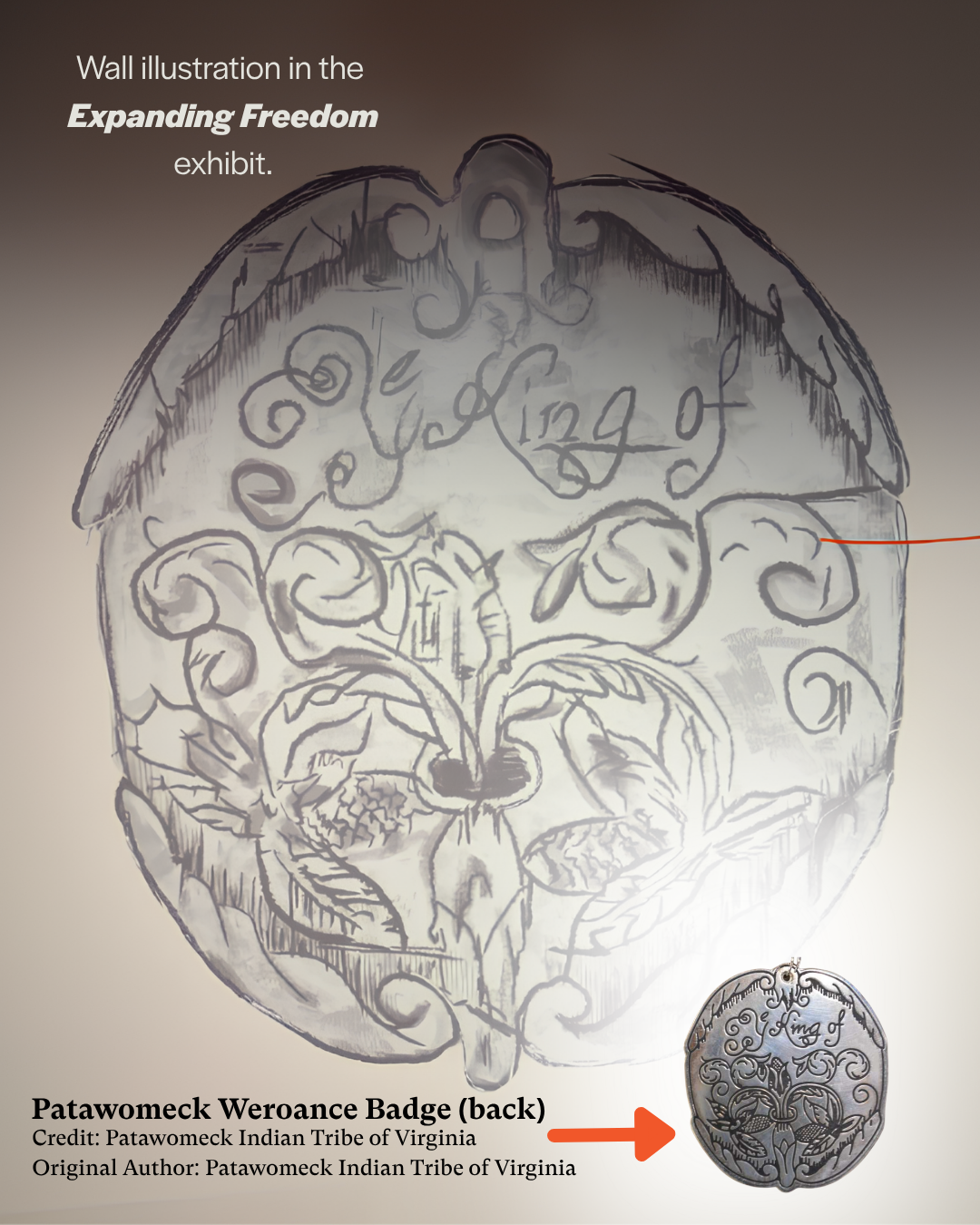
The Virginia General Assembly gave Wahanganoche, the king of the Patawomeck, a silver badge after passing the 1662 act “Concerning Indians.” The act required that Indigenous leaders with whom the colonial government had a treaty keep such a badge as a kind of passport. While technically a “gift,” the badges also served as a form of control over Native groups.
Judge Gregory reflected upon the Supreme Court's infamous Dred Scott decision, which, in his words, declared that African Americans belonged to “an inferior order” and possessed no rights “that any white man was bound to respect.” The decision denied citizenship altogether, reducing belonging to something conditional, behavioral even. Judge Gregory went on to offer perhaps the evening's clearest distinction between citizenship and belonging. “Belonging,” he reflected, “is a sense of comfort...that someone respects your existence.”
His words reveal what these documents have long negotiated.
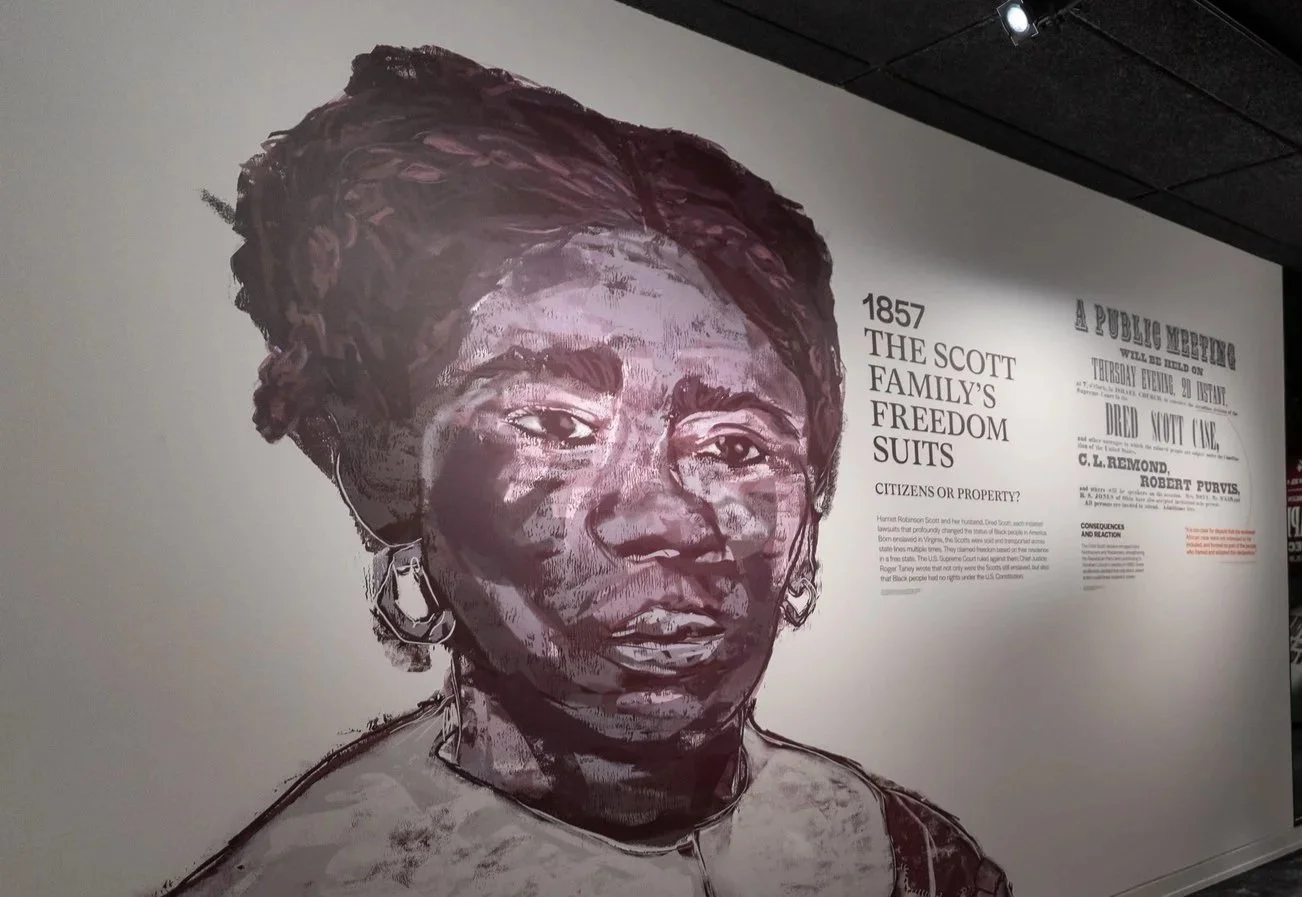
Tribal badges, freedom papers, birth certificates, and, more recently, Real IDs are not merely identity records; they are material manifestations of recognition. Although each represents a different historical moment, the federal implementation of Real ID requirements reflects contemporary concerns about immigration and national security, and it illuminates a recurring national pattern. Throughout American history, documentation has often served as more than mere administrative record-keeping. It has become one of the principal ways the nation has negotiated whose humanity is acknowledged, whose presence is legitimized, and whose belonging is made visible.
The evening concluded with a look forward, using history to better understand the present. The conversation’s greatest feat was demonstrating that contemporary debates over citizenship are not isolated political controversies. Rather, they are the latest chapter in a much longer history of negotiating recognition, participation, and humanity. Although the documents have evolved, the underlying question has remained remarkably consistent:
Who belongs?
History reminds us that the answer has never been inevitable. People have always debated, contested, legislated, and ultimately shaped it. If the meaning of citizenship has changed before, and if belonging has always required more than just paperwork, what responsibilities do we, the people, bear in deciding who belongs today?
The views and opinions expressed in this post are those of the guest author and do not necessarily reflect the official positions or perspectives of the Shockoe Institute.
